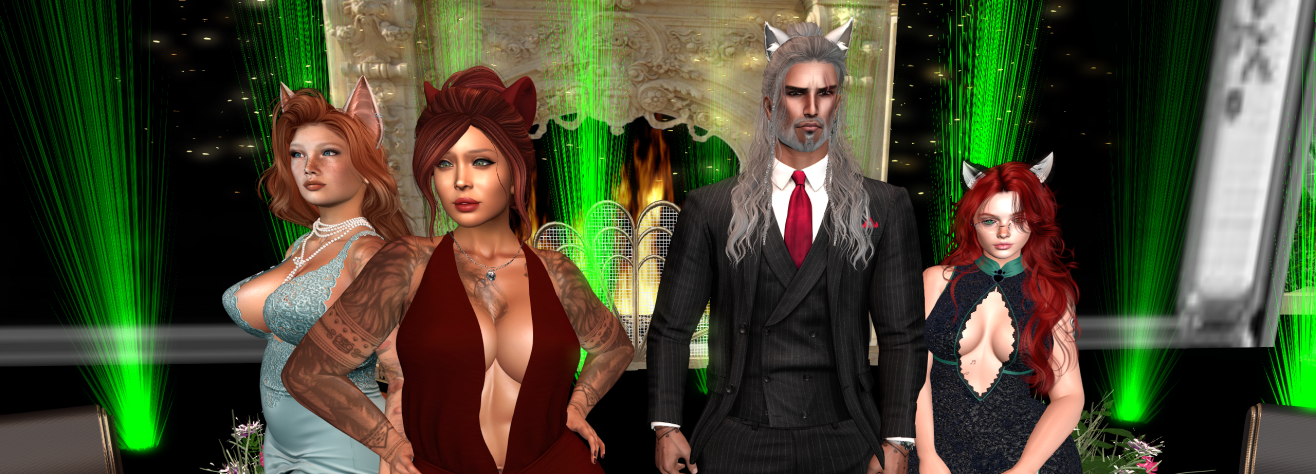
Second Life is an online, user-created virtual world where you control an avatar and essentially decide for yourself what you want to do. It looks a little like an online video game, but it doesn’t really work like a traditional game because there is no main storyline, no final boss, no required missions, and no way to “win.”
Think of it as a combination of a social network, a giant 3D chat room, a creative sandbox, an online marketplace, and a role-playing world.
When you join Second Life, you create an avatar, which is the virtual person or character that represents you. Your avatar can look almost any way you want: human, fantasy creature, animal, robot, vampire, fairy, monster, historical character, or something completely original. People can buy or create clothing, bodies, hairstyles, animations, vehicles, houses, furniture, and thousands of other things for their avatars.
The world itself is made up of thousands of virtual locations, usually called regions or sims. These places are largely created by Second Life residents rather than by the company running Second Life. You might teleport from a realistic modern city to a medieval kingdom, a nightclub, a tropical beach, a farm, a science-fiction space station, a haunted castle, a wrestling arena, or an elaborate fantasy world—all within a few minutes.
A huge part of Second Life is social interaction. People talk through text chat or voice, make friends, date, join communities, attend parties, go dancing, listen to live musicians or DJs, participate in clubs, role-play, attend weddings, visit art galleries, play games, or simply hang out. For many residents, the relationships and communities are the main reason they use Second Life.
There is also a very strong creative side. Residents can build buildings and landscapes, design clothing, create animations, make scripted interactive objects, operate clubs or businesses, create role-playing communities, organize events, and sometimes build entire towns or fantasy worlds.
Second Life also has its own virtual currency called the Linden Dollar (L$). Residents use Linden Dollars to buy virtual goods and services. Because Linden Dollars can be exchanged under Linden Lab’s system, Second Life has developed a genuine virtual economy. Some people run stores, rent property, DJ, perform music, create clothing, design avatars, sell furniture, manage clubs, or offer other services.
So, for example, one person’s evening in Second Life might involve:
- Logging in as their customized avatar.
- Teleporting to a friend’s virtual house.
- Going to a nightclub where another resident is DJing live.
- Shopping for a new outfit.
- Visiting a fantasy role-playing community.
- Driving a motorcycle around a virtual highway.
- Attending an art exhibition.
- Going home and decorating their virtual property.
And another person might spend the entire evening building a castle, running a business, farming, wrestling, role-playing, or chatting with friends.
There are also areas intended specifically for adults, and Second Life has maturity ratings and rules governing that content. Because so much of the world is made by users, the experience can vary enormously depending on where you go and which communities you become involved with.
The biggest misconception
Calling Second Life simply “a game” can give people the wrong idea.
In that sense, it’s almost like the internet turned into a physical-looking 3D place that you can walk around inside.
Official Site | Second Life – Virtual Worlds, Virtual Reality, VR, Avatars, and Free 3D Chat

Leave a Reply